Robust Theme
Dec 09, 2019 2020-04-08 7:40Robust Theme


Debunking the Dictatorship Myth: Understanding Israel's Parliamentary System and Netanyahu's Leadership
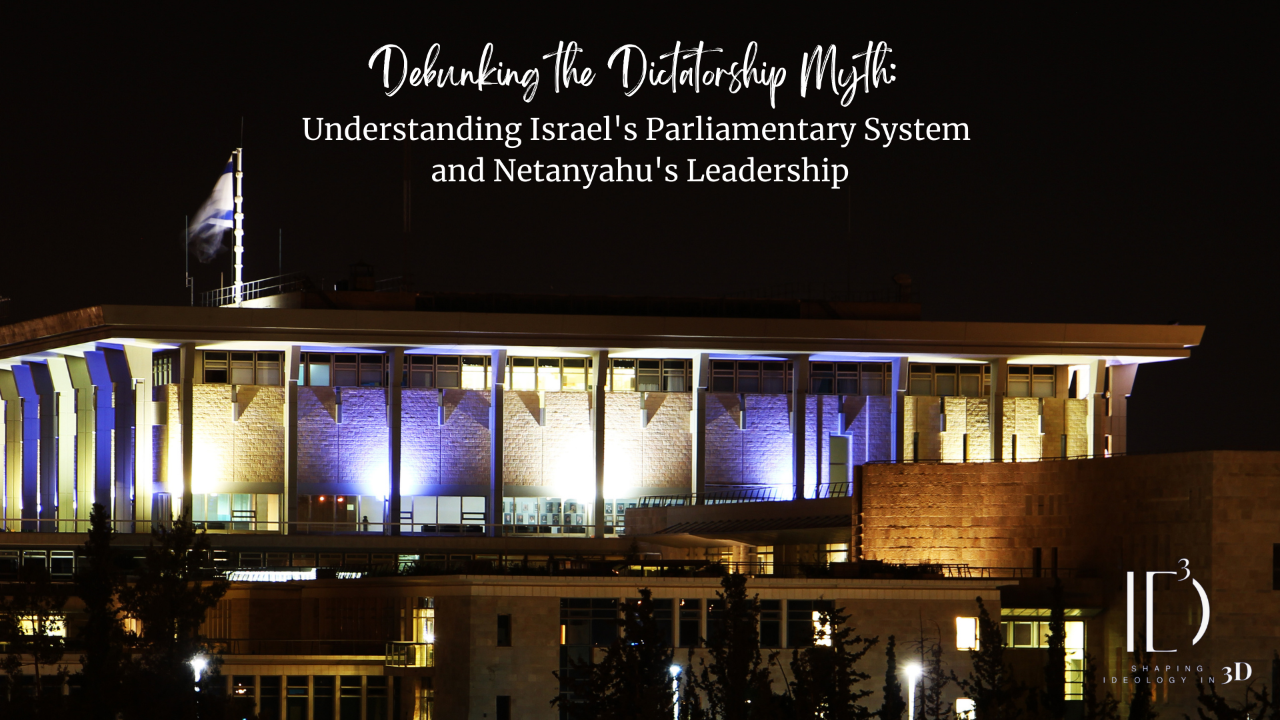
Introduction: The political landscape of Israel is often a subject of heated debate, with many different opinions surrounding its leaders and system of governance. One such claim, which has recently resurfaced, is that former Prime Minister Benjamin Netanyahu was a dictator who wanted to take over the Supreme Court. In this blog post, we will provide a brief overview of Israel's parliamentary system and counter the claim that Netanyahu was a dictator by discussing his leadership style and the country's judicial system.
Understanding Israel's Parliamentary System: Israel operates under a parliamentary system of government, with a unicameral legislature called the Knesset. The Knesset has 120 members, who are elected through a system of proportional representation. The President of Israel, a largely ceremonial role, tasks the leader of the party with the most Knesset seats or the one most likely to form a majority coalition, with forming the government.
Coalition governments are common in Israel, as it is rare for a single party to win an outright majority. These coalitions necessitate negotiation, compromise, and collaboration among different factions, indicative of a functioning democracy.
Netanyahu's Leadership and the Israeli Judiciary:
-
Democratic elections: Netanyahu was democratically elected multiple times, serving as Israel's Prime Minister for a total of five terms. This demonstrates that he held office due to the support of the Israeli electorate.
-
Separation of powers: Israel has a system of checks and balances, with power distributed among the executive, legislative, and judicial branches. The Prime Minister does not have unilateral authority to control the Supreme Court, and any changes to the judiciary must be approved by the Knesset, Israel's legislative body.
-
Independent judiciary: Israel's Supreme Court has a long history of independence and impartiality. Although there have been disagreements between the government and the court, it remains one of the most respected institutions in the country and continues to maintain its autonomy.
-
Freedom of speech: Throughout Netanyahu's tenure, Israeli citizens and the press maintained their right to express dissenting opinions and criticize the government. A true dictatorship would suppress these rights to maintain absolute control.
-
Coalition governments: As mentioned earlier, Israel's political system typically requires the formation of coalition governments. During Netanyahu's time in office, his governments were formed through partnerships with various political parties. These coalitions highlight the need for negotiation, compromise, and collaboration among different factions, which is indicative of a functioning democracy rather than a dictatorship.
Conclusion: While it is important to engage in constructive dialogue and critique political leadership, it is essential to avoid spreading misinformation.
The claim that Benjamin Netanyahu was a dictator who wanted to take over the Supreme Court is not supported by the facts. Israel's parliamentary system, with its checks and balances, ensures that power is distributed among the different branches of government. Netanyahu's leadership, while controversial at times, was underpinned by democratic principles and the support of the Israeli electorate.
It's essential to approach these discussions with accurate information and a nuanced understanding of Israel's political system. By acknowledging the democratic nature of Israel's government, the separation of powers, and the importance of coalition-building, we can foster a more informed and productive dialogue about the country's leadership and institutions. While there may be valid criticisms of any political figure or administration, it is crucial to differentiate between legitimate concerns and unfounded claims that undermine constructive debate.
